
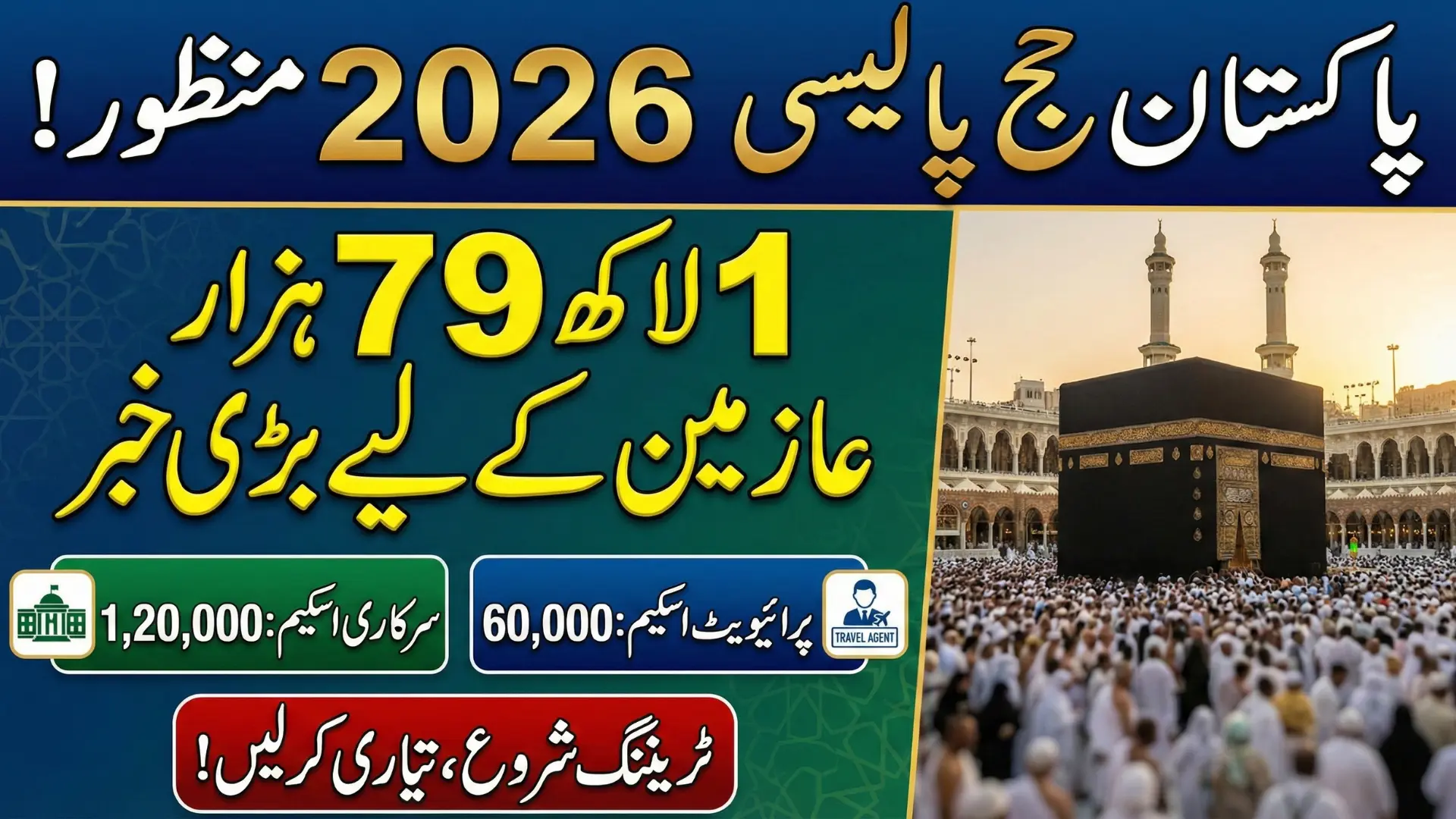
Pakistan has officially approved its Hajj Policy 2026, confirming a total quota of 179,210 pilgrims in line with Saudi guidelines. Around 120,000 pilgrims will perform Hajj under the government scheme, while about 60,000 will go through private operators. Mandatory Hajj training has already begun nationwide to better prepare pilgrims.
The government also confirmed that 38,000 pilgrims will travel via the Road to Makkah project from Islamabad, with Karachi included and Lahore under consideration for expansion. The policy also highlights improved pilgrim facilities, transparency, and better travel arrangements for Hajj 2026.

Hajj Quota 2026
Pakistan’s total Hajj quota for 2026 stands at 179,210 pilgrims, a figure approved in line with Saudi regulations.
Quota Breakdown
- Around 120,000 pilgrims will perform Hajj under the government scheme
- Approximately 60,000 pilgrims will go through private Hajj operators
This balanced split is aimed at improving service delivery while giving pilgrims multiple options based on budget and convenience.
Also Read: BISP Registration Check by CNIC 2026 – Complete 8171 Verification & Eligibility Guide
Pakistan Hajj Policy 2026 Key Points
| Category | Details |
|---|---|
| Total Hajj Quota | 179,210 pilgrims |
| Government Scheme | ~120,000 pilgrims |
| Private Scheme | ~60,000 pilgrims |
| Training Status | Ongoing nationwide |
| Road to Makkah | Islamabad & Karachi |
| Expected Expansion | Lahore (under consideration) |
Hajj Training 2026 – Mandatory & Already Underway
One of the most important updates is that Hajj training sessions have already started across the country.
Why This Matters
- Training is mandatory, not optional
- Sessions are being held in various districts
- Pilgrims are guided on rituals, travel rules, health care, and discipline
For first-time pilgrims especially, this preparation can make the difference between confusion and calm during the sacred journey.
Also Read: 9999 CNIC Check for Ramzan Relief Package Via SMS – Step-by-Step Guide
Road to Makkah Project – Relief Before Takeoff
A major comfort update came with confirmation that around 38,000 pilgrims will travel from Islamabad under the Road to Makkah project.
This facility allows pilgrims to:
- Complete Saudi immigration in Pakistan
- Avoid long queues after landing
- Enter Saudi Arabia as cleared pilgrims
Currently, the service is operational in Islamabad and Karachi, while Lahore is under active consideration for inclusion a move that would benefit thousands from central Punjab.
Beyond Hajj: Interfaith Harmony & Minority Support
During the same conversation, the minister highlighted the wider role of the Ministry of Religious Affairs.
Key Initiatives for Minority Communities
- Scholarships for minority students
- Funds for rehabilitation of worship places
- Financial assistance for deserving individuals
- Separate job quotas
- Representation in parliament
He stressed that Pakistan’s Constitution guarantees equal rights for all religious communities, and the ministry works as a platform to strengthen unity and social cohesion.
Also Read: PM Ramzan Package Application Process 2026 – Know Registration Full Details
New System for Zaireen – Iran & Iraq Pilgrimages
Another important announcement: The ministry has launched a new centralized system to organize pilgrimages for Zaireen traveling to holy sites in Iran and Iraq.
This system aims to:
- Improve coordination
- Enhance safety
- Reduce unregulated travel issues
A long-standing demand from pilgrims has finally been addressed.
Why This Policy Matters for Ordinary Pakistanis
For many families, Hajj is a once-in-a-lifetime dream. Clear policies, early training, and smoother travel processes mean:
- Better planning
- Fewer last-minute shocks
- Reduced stress for elderly pilgrims
- More transparency in costs and services
In simple words, less confusion, more focus on ibadat.
Also Read: Green Tractor Scheme Phase 3 Last Date Alert — Apply Before Deadline Step-by-Step Guide
Final Words
The approval of the Hajj Policy 2026 marks an important step forward. With a confirmed quota, ongoing training, expansion of the Road to Makkah project, and improved systems for pilgrims, the government has laid down a clearer path for those preparing for this sacred journey.
For intending pilgrims, the message is simple: stay informed, attend training, and prepare early because Hajj 2026 planning has officially begun.